Revenge Bedtime Procrastination: Why You Scroll Late
Revenge bedtime procrastination: why you trade sleep for late-night scrolling, and why a phone-free bedroom works better than a bedtime limit.
The short answer
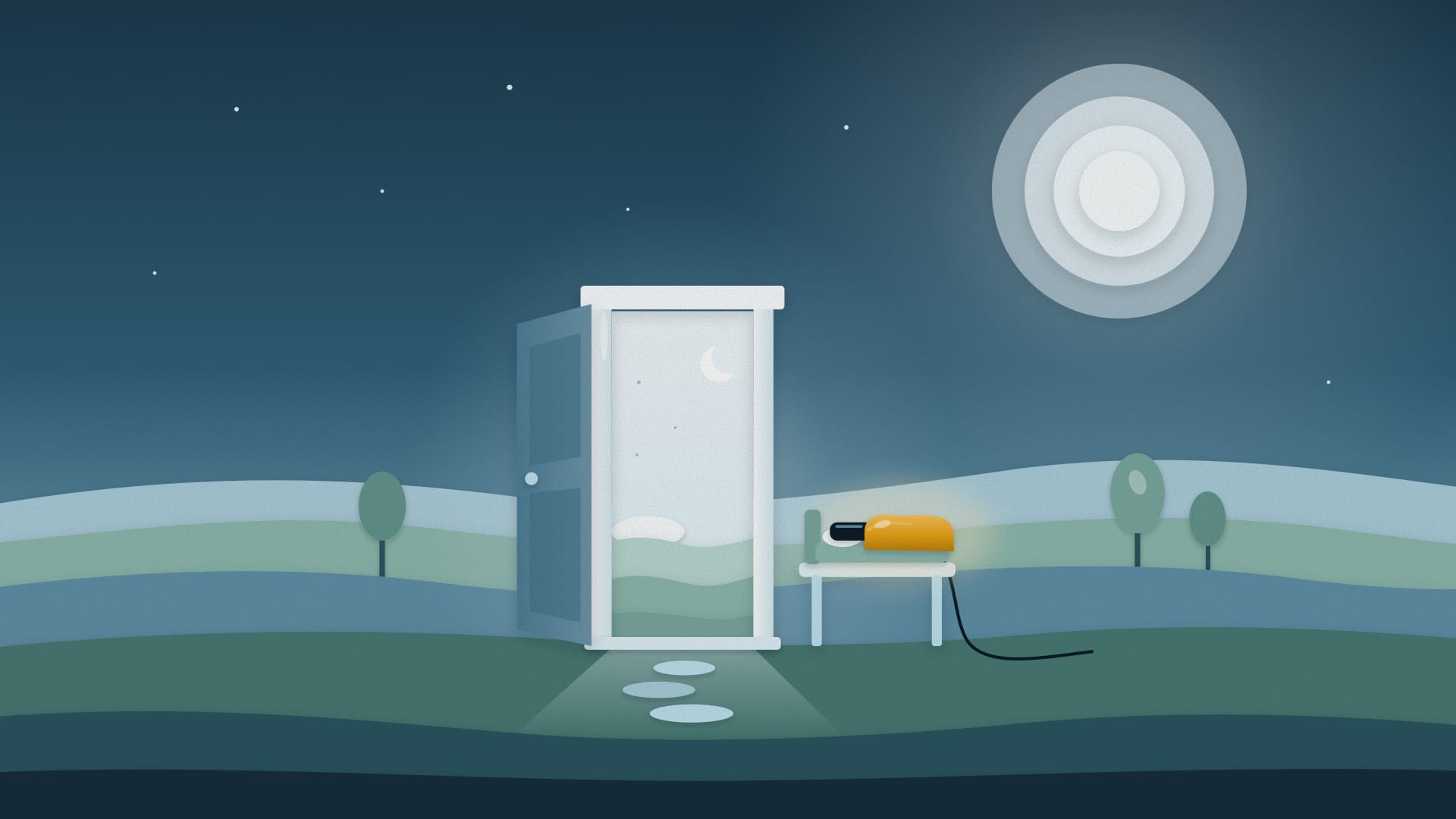
Revenge bedtime procrastination is staying up later than you meant to, usually on your phone, to claw back free time the day did not give you. It is less about the phone than about the day, but the phone makes it endless. The fix that holds is a place rule: the phone sleeps outside the bedroom, so the last and first taps of the day happen on purpose.
- It is staying up late to reclaim free time the day did not give you, not plain laziness.
- A feed has no last page, so "ten more minutes" of revenge time rarely ends by itself.
- Time limits fire when you are tired enough to dismiss them; a place rule needs no late-night decision.
- Charge the phone outside the bedroom and make the last and first check of the day deliberate.
- Protect some real free time earlier in the evening so the night does not have to supply it.
You finally get the evening to yourself at 10:30 pm, and you know you should sleep. Instead you lie in bed and scroll, not because it is great, but because it is yours. Then it is 1 am, and tomorrow-you is going to pay for it.
If that sounds familiar, there is a name for it, and a fix that does not depend on willpower at midnight.
What is revenge bedtime procrastination?
Revenge bedtime procrastination is staying up later than you planned, for no reason other than wanting time that belongs to you. The phrase is a translation of a Chinese expression that spread on social media around 2020, and it stuck because so many people recognised themselves in it. Sleep researchers use the plainer term “bedtime procrastination” for the same pattern: going to bed later than you intended, without anything actually stopping you.
The “revenge” part matters. You are not staying up because you love the feed. You are staying up because the day was full of other people’s demands, and sleep feels like the day winning one more round. The late night is the one stretch nobody can claim.
Three things usually show up together:
- You go to bed later than you meant to. Not once, but as a habit.
- There is no good reason. No deadline, no crying baby, no emergency. Just scrolling, a show or a game.
- You know it costs you. You can predict the tired morning, and you do it anyway.
It is a cousin of doomscrolling, but the motive is different. Doomscrolling is pulled along by bad news. Revenge scrolling is about reclaiming time, and the content barely matters.
Why do you scroll late when you are exhausted?
You would think being tired makes it easier to stop. It does the opposite.
Scrolling costs nothing; stopping costs a decision. A feed asks for no effort. Putting the phone down, plugging it in and turning off the light is a small chain of choices, and at the end of a long day small choices feel big.
The feed has no last page. A book has chapters. A TV episode ends. A feed loads the next thing before you have finished the last one, so “ten more minutes” never meets a natural stopping point. Our guide to the psychology of app addiction goes into the design choices behind that.
Sleep feels like losing. If tomorrow already looks full, going to bed means fast-forwarding into it. Staying up is a small act of protest, and the phone is the easiest way to stage it from under a duvet.
Willpower is weakest exactly then. Whatever self-control you had at 9 am is not what you have at 11:45 pm, which is why willpower alone tends to fail against late-night habits.
None of this means something is wrong with you. It means the setup is working against you at the moment you are least able to push back.
Why don’t bedtime time limits work?
The obvious fix is a limit: “no social apps after 11 pm”. It is a reasonable idea with a timing problem.
A time limit asks you to decide at the exact moment you are worst at deciding. The limit pops up, you are comfortable, you are tired, and “15 more minutes” is right there. You tap it. Tomorrow you tap it again. Before long the limit is a ritual you dismiss rather than a boundary you keep.
A place rule works differently. “The phone doesn’t come into the bedroom” is decided once, at a time when you are thinking clearly, and then it just holds. There is nothing to snooze at midnight, because the phone is on the kitchen counter.
| Time rule (“off at 11 pm”) | Place rule (“not in the bedroom”) | |
|---|---|---|
| When you decide | Every night, while tired | Once, while awake and clear |
| What you have to resist | A button that says “15 more minutes” | Getting out of bed and walking to another room |
| What happens on a bad night | You dismiss it | The phone is still in the hall |
| Works for the morning too | No | Yes, the first tap waits as well |
Limits still help earlier in the evening. At bedtime, distance beats rules.
How do I make the bedroom a phone-free place?
Let the room itself do the work.
- Pick a charging spot outside the bedroom. Hallway, kitchen, living room. Make it a real spot with a charger that lives there, so the phone has somewhere to go.
- Buy a basic alarm clock. If the phone is your alarm, it will be in your bed. A cheap clock removes the best excuse.
- Make the last check of the day happen at the door. Reply to the one message, check tomorrow’s first meeting, set the phone down. That deliberate last tap replaces the endless one.
- Keep the reclaimed time, minus the phone. Put a book, a puzzle book or headphones with an audiobook by the bed, so the “me time” survives the move.
- Plan for the walk back. You will be tempted to fetch it. Decide now that the answer is “tomorrow”.
How to stop scrolling at night covers the wider wind-down routine, from a digital sunset to the Sleep Focus and Bedtime mode settings on iPhone and Android.
If the phone has to stay close, for a parent on call or a shared room, put a short pause before the apps you scroll most. Respite adds a gentle pause before the apps you pick, so the 1 am tap becomes a choice instead of a reflex, and the free plan includes one schedule, which is enough for a bedtime window.
What about the first tap in the morning?
Revenge scrolling has a morning twin. If the phone sleeps next to you, it is also the first thing you reach for, and a late night often turns into a morning scroll in bed.
The place rule handles both ends. When the phone charges in the hall, the first check of the day waits until you have walked there. Make that first tap deliberate too: decide what you are checking for before you unlock it. Our guide to not checking your phone first thing in the morning has a simple routine for those first 30 minutes.
How do I get the “me time” back without stealing it from sleep?
This is the part most advice skips. If you only take the phone away, you are left with the reason you were scrolling: you wanted time that was yours. Ignore that and the habit comes back.
Here’s a hypothetical example. Sam gets home at 7, cooks, tidies, answers work messages until 10, and then finally sits down. The only free time is after 10, so it stretches past midnight. The fix isn’t a stricter bedtime. It’s moving 30 protected minutes to 8:30, with the work phone muted and something Sam actually enjoys, so there is less to take revenge for at 11.
A few ways to do the same:
- Put a hard stop on the day’s obligations. Work messages, chores and admin end at a set time, even if some things wait.
- Make the free time good. Revenge scrolling is often a poor substitute for rest. A walk, a call with a friend or a hobby fills the tank better. Our list of healthy alternatives to scrolling has ideas.
- Name it. “This is my time” is easier to protect when it has a start and an end, and nobody books over it.
When is it more than a habit?
Revenge bedtime procrastination is a habit, not a diagnosis. But if you can’t sleep even with the phone in another room, if worry keeps you up, or if you feel exhausted most days, that is worth raising with a doctor. Late scrolling can also be a way of avoiding anxious thoughts at night; phone addiction and anxiety looks at that link. This article isn’t medical advice.
Next step
Tonight, choose the charging spot outside your bedroom and put the phone there before you brush your teeth. Make that your last tap of the day. If you want a pause on the apps that keep you up when the phone has to stay close, download Respite; it is free on iPhone, Android and Chrome.
Related Articles:
Frequently asked questions
What is revenge bedtime procrastination?
It is putting off sleep, even when you are tired, to get some time that feels like your own after a day run by work, study, family or other people. The "revenge" is against the day, not against anyone. Most people spend that stolen time on a phone, because it is the easiest thing within reach, and a feed has no natural end.
Why do I stay up late scrolling when I am exhausted?
Because the late hours are often the only time nobody needs anything from you, and going to sleep feels like handing the next day the win. Being tired makes it harder, not easier, to stop: the feed asks for no effort, and deciding to put the phone down asks for a little. That small gap is where an hour disappears.
Is revenge bedtime procrastination a sleep disorder?
No. It describes a habit and a pattern, not a diagnosis. It is different from insomnia, where you try to sleep and cannot. That said, regularly cutting sleep short can affect mood, focus and health. If you struggle to sleep even when the phone is away, or feel exhausted most days, talk to a doctor.
How do I stop revenge bedtime procrastination?
Treat the bedroom as a place rule rather than relying on a bedtime limit: charge the phone outside the room and use a cheap alarm clock. Make the last check of the day deliberate, at the door, and the first check of the morning deliberate too. Then move some real free time earlier in the evening, so you are not raiding your sleep to find it.
Do screen time limits help with late-night scrolling?
They help a little, but a limit that fires at 11:30 pm asks a tired person to make a decision, and tired people tend to tap "ignore". Limits work better earlier in the evening. At bedtime, distance does more: if the phone is in another room, there is nothing to dismiss. A pause before your usual apps helps when the phone must stay close.
Keep reading